A serum name is not evidence of a GLP-specific effect
A topical serum may be a skin-care step, but phrases such as “GLP skin rebound” do not by themselves show that it reverses loose skin or restores facial volume after weight change. Start with the actual manufacturer, complete ingredient list and precise outcome being promised.
Start with the skin-care job you want: moisture, a particular appearance concern or a change in facial volume. Those are different questions, and a cosmetic name does not make them interchangeable.
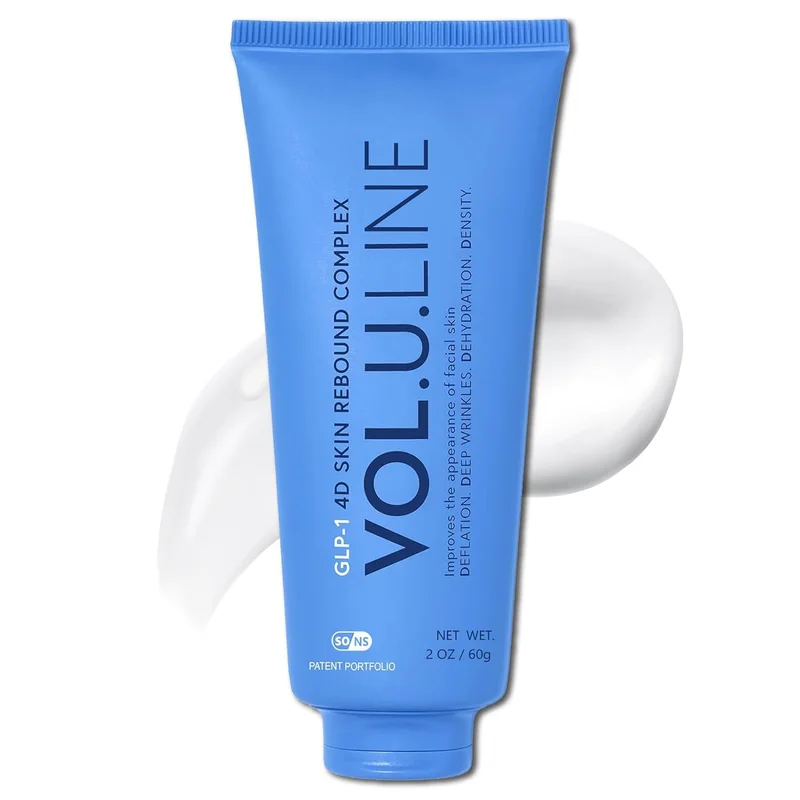
Example listing: a single tube marketed with GLP/firming language.
Three different questions often get combined
| Question | What to look for | Why the distinction matters |
|---|---|---|
| Does it moisturize? | Identified formula and directions; how the product is intended to be used | A surface-care function is different from restoring lost volume. |
| Does it change an appearance measure? | A defined outcome, assessment method and timeframe in evidence for the finished formula | An ingredient headline or before/after photo does not describe a controlled test. |
| Does it reverse loose skin or replace volume? | Direct evidence for that specific structural claim | The word “rebound” does not establish that result. |
The AAD describes appearance and hair changes reported during GLP treatment, with uncertainty about causes. That context does not establish that an unrelated branded tube treats the change. A personal concern about new skin changes is a different question from adding another cosmetic to a shelf.
Why a famous ingredient name is not enough
Even when a listing mentions a recognizable ingredient, ask whether the complete formula, amount and product identity are established. A study on an ingredient in one setting is not automatically a trial of the finished tube in another setting. Without a complete ingredient list, a shopper also cannot make an ordinary allergy or routine-overlap comparison.
Keep basic functions clear while comparing
For ordinary skin-care shopping, distinguish a cleanser you wash off, a moisturizer you leave on and a sunscreen used according to its label. A serum is an additional format, not proof that those other functions are covered. Choose a texture and packaging you will use consistently rather than treating more steps as a better routine.
Our moisturizer comparisons use identified CeraVe, Eucerin and Aquaphor products with current manufacturer information. They describe cream, lotion and ointment differences without claiming they tighten loose skin or replace facial fat. That is a more concrete comparison than a vague promise of “rebound.”
Where should I start for a personal concern?
Record what changed and when, the products used and any irritation, then bring those details to an appropriate dermatology assessment. That gives the conversation something specific to work with without turning a cosmetic purchase into a diagnosis.
Read next
Sources and method
Exact-item note: the pictured 4D Skin Rebound/VOL.U.LINE listing still lacks a reconciled manufacturer identity and complete INCI list. Its product page retains a limited-profile notice; no ingredient formula or efficacy is assumed here.
- American Academy of Dermatology: GLP medicines and skin/hair changes — updated February 17, 2026; general dermatology context, not a review of this serum.
- AAD: a skin-care routine on a budget — basic cleanser, moisturizer and sun-protection roles.
Sources checked October 29, 2026.
Prepared by GLP Finds with AI-assisted writing and checked against the listed sources. Our editorial process.